
Saturday 12 Sep 2026
Ten years of the Hopper Fare: Mayor of London celebrates a decade of cheaper, fairer bus travel for Londoners
PN-231
- More than 1.43bn ‘hops’ now taken place across London – making it easier and more convenient for people to travel by bus or tram
- London's buses are the most used form of public transport in the city, with more than five million bus journeys made on a typical day, playing a vital role in keeping the capital moving and communities connected
- Mayor and Transport for London (TfL) continue investing in the capital's buses and trams to deliver greener vehicles, more efficient network, more reliable service and better customer experience
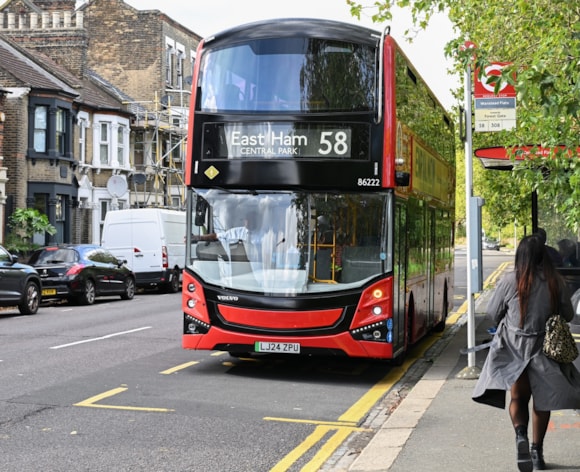
The Mayor’s Hopper fare, which allows unlimited bus and tram journeys in London for the price of a single journey when made within an hour of the first journey, is ten years old this weekend.
First launched on 12 September 2016, the fare is automatically given to anyone who uses pay as you go with a contactless bank payment or Oyster card. Initially only allowing one extra bus and tram journey within an hour, the scheme was expanded to allow unlimited journeys within an hour on 31 January 2018.
More than 100 million ‘hops’ were made in its first year, and since it launched, more than 1.43bn ‘hops’ have now taken place across London – making it easier and more convenient for people to travel by bus or tram.
The Hopper fare also applies to discounted rate fares, such as those made using a Bus & Tram Discount Photocard, Jobcentre Plus Travel Discount card, or Care Leavers Oyster Photocard.
The success of the 'Hopper' over the last decade has helped encourage people across London to switch from their cars to public transport - supporting the Mayor's wider work to clean up London's air and improve the local environment. The 'Hopper' is also of particular benefit to Londoners on lower incomes, who rely on bus services more to get around, as well as those with pushchairs and small children.
This summer, the Mayor also launched the Weekend Hopper, which allowed customers who travelled on a Saturday, Sunday or Bank Holiday Monday to make unlimited bus and tram journeys for the price of a single journey. Across the eight weekends that the offer ran for, 6.8 million customers ‘hopped’ aboard, saving people £15 million.
The Mayor of London, Sadiq Khan, said: “Ten years ago, I introduced the Hopper fare to make travelling around London by bus simpler, more affordable and fairer.
“I’m incredibly proud of the difference it has made to Londoners’ everyday lives - whether helping people get to work, do the school run, visit friends and family or simply explore our great city. More than 1.4bn Hopper journeys have now been made, allowing Londoners and visitors to change buses without paying another fare.
“Throughout my time as Mayor, I’ve been determined to keep public transport affordable. I’ve delivered a record seven freezes of bus and tram fares and extended the current freeze, to support Londoners through the ongoing cost-of-living pressures.
“Buses and trams are a lifeline for millions of people, so it was fantastic to mark this tenth anniversary by extending the benefits of the Hopper even further through this summer’s Weekend Hopper.
“The Hopper fare has created a lasting legacy for our city, and I’ll continue working to ensure London’s public transport remains affordable, accessible and available to everyone.”
Lorna Murphy, Director of Buses at TfL, said: “It's great that the Hopper fare has been helping bus and tram customers across London save money for a decade. Travelling on buses and trams in London represents fantastic value for money, with a single adult fare costing just £1.75. By helping Londoners save money while encouraging further use of buses and trams, we can help reduce congestion and make it easier for people to travel across London.”
Karim Fatehi OBE, Chief Executive of London Chamber of Commerce and Industry, said: “As a global city, London relies on a world-class public transport network to help keep the capital competitive. It connects people to jobs, supports businesses, drives investment, and helps ensure the capital remains an attractive destination for visitors from around the world. Public transport also has a critical role to play in London’s transition to a more sustainable future, so it is great to see the positive impact the Hopper fare has had over the past decade helping make travel across the capital more affordable and accessible.”
Dee Corsi, Chief Executive of New West End Company, said: “Over 13 million people a year arrive into the West End by bus; it is a critical part of London's public transport system, and drives footfall and economic activity across the district. We welcome the Mayor’s ongoing investment in public transport and initiatives like the Hopper Fare which provide value-for-money for London’s residents, workers and visitors, helping to stimulate activity across the West End.”
Tamsin Ace, Director of East Bank, said: "As we celebrate 10 years of the Hopper fare, it's important to recognise the role affordable transport plays in opening up access to opportunity. At East Bank and Queen Elizabeth Olympic Park, affordable travel helps people connect with culture, learning, sport, nature and community activity. By making it easier for people to access world-class institutions, free cultural programming, participatory sport and green spaces, the Hopper fare helps ensure these opportunities remain open to all."
Nic Durston, CEO of South Bank Business Improvement District, said: “South Bank benefits from the many bus routes that connect our neighbourhood to other parts of London - making it an easy place to visit, whether for work or leisure. Over the past ten years, the Hopper fare has played a vitally important role in ensuring that South Bank remains accessible to all, enabling people to come and enjoy everything the area has to offer, whether that’s the riverside setting, the iconic architecture, the incredible cultural offer, the internationally renowned visitor attractions like the London Eye, or the array of restaurants, bars, markets and street food.”
Ben Plowden of Campaign for Better Transport said: "The Hopper Fare is a great example of smart, simple, fair ticketing. By making travel by bus and tram both easy and affordable, it has helped London's public transport go from strength to strength. Happy birthday to the Hopper Fare!"
Pete Brierely, Citizens UK Director, London said: "Celebrating ten years of the Hopper fare means celebrating a decade of Londoners being better connected.
"Being able to travel across the city is about more than just getting from A to B - it can impact your health, social connections and ability to work. Whether that means seeing friends and family, accessing essential services or taking part in community life, accessible bus fares are vital for so many Londoners. The Hopper fare has been an important step towards making sure our transport system is for everyone."
Matthew Sims, Chief Executive, Croydon Business Improvement District (BID), said: “London is the best city in the world. Connecting places and people is at the heart of any successful destination. London has, through the Hopper Fare, allowed those that live, visit and work in the capital the opportunity to explore our great city for everything it has to offer at an affordable price. It’s not complex, its simple and has made such a positive impact to our lives. The Hopper Fare has, in its ten years, has enhanced the accessibility of our city, increasing the opportunity to attract greater numbers into our high streets at a time when it is most needed. London has shown, through the Hopper Fare, that it is possible to connect people with destinations through our bus and tram network that puts people first.”

Buses and trams play a crucial role in reducing congestion, carrying up to 80 times as many customers as a car while using significantly less road space by proportion. Buses are the most inclusive form of public transport in London, with 96 per cent of households within 400 metres of a bus stop and more than 90 per cent served by high-frequency routes [1]. Buses and trams also offer the most accessible and affordable way to travel sustainably in the capital, with fares among the lowest in the UK and all bus routes served by low-floor vehicles with a dedicated wheelchair space, providing a vital lifeline for vulnerable Londoners and lower income households.
The Mayor and TfL are working hard to enhance London’s bus network and ensure it provides the quick easy connections Londoners need between key locations like town centres, hospitals and stations. Since 2023, the game-changing Superloop network of express bus services has grown to cover 218 kilometres of routes, boosting ridership and transforming outer London travel. Plans are now in place to expand the network even further, with the SL12 between Gants Hill, Romford, Elm Park and Rainham launching recently, followed by SL14 and SL15 in 2027, ensuring buses continue to play a critical role in building a greener London with a sustainable transport network.
TfL continues to invest in improving its bus fleet to provide customers with a more comfortable and accessible travelling experience. Already recognised as having the largest zero-emission bus fleet in Western Europe, London has seen a rapid 100-fold increase over the past decade, from just 30 electric buses in 2016 to more than 3000 today. TfL is accelerating the delivery of its zero-emission fleet, which is set to double in under five years.
London's buses are among the greenest in the world, with lower CO₂ emissions per passenger kilometre than cities such as New York and Vancouver[2]. Buses also play a crucial role in reducing congestion, carrying up to 80 times as many passengers as a car while using only around three times as much road space.
The Mayor and TfL are making the bus network greener in more ways than one, having also converted all the lighting at its bus shelters to Light Emitting Diode (LED) lighting. Around 12,000 bus shelters across the capital now have more energy-efficient, luminous and longer-lasting lights, making the shelters both greener and more welcoming for customers. The new lighting will use less than half as much energy and brighten up bus shelters by 10 per cent. USB charging facilities, improved heating and cooling features, clearer priority seating and enhanced real-time customer information are now available across the network.
Across the tram network, work is being carried out to make tram stops more customer-friendly, along with track works regularly taking place to improve the journey for customers. TfL is also working to replace its ageing tram fleet to offer customers a more comfortable and reliable service – along with several improved features including a redesigned interior, air-conditioning, the latest audio and visual real-time travel information, and mobile device charging points. The new trams will also include a multi-use area, which is designated primarily for wheelchair users, and is also able to accommodate pushchairs and luggage when not in use.
TfL recently introduced more features to TfL Go – London’s Official Travel app, designed to provide mobile-friendly and accessible travel information to customers travelling across London. Search functionality on the bus stop map has been improved, making it easier to find bus stops across London. App users can also save and personalise locations for journey planning, making it easier to plan their journeys. Customers can also track their ‘next bus’ in real-time along its route, informing them about waiting times and supporting route planning.
For more information about the Hopper fare – please visit https://tfl.gov.uk/fares/find-fares/bus-and-tram-fares#on-this-page-0
Contact Information
TfL Press Office
Transport for London
0343 222 4141
pressoffice@tfl.gov.uk
Notes to editors
[1] content.tfl.gov.uk/bus-action-plan.pdf
[2] Source: The Performance of London Buses
- TfL has committed to ensuring all new vehicles entering service are zero-emission and is working with bus manufacturers to develop a vibrant and competitive zero-emission market, alongside work with stakeholders to ensure necessary infrastructure is available to enable the transition
- Since April 2021, TfL has increased the amount of bus lanes across London by eight per cent, introducing a further 25.54km of new bus lanes on roads where buses suffer delays due to congestion. Pinch-points along routes continue to be tackled through junction improvements and technological improvements at traffic signal junctions, with TfL working on 500 Bus Priority traffic signal timing reviews and delivering 135 traffic signal schemes across London by the end of March 2027.
- In 2023, TfL launched the Superloop. The success of the game-changing Superloop network has had more than 81 million trips made on Superloop routes since its introduction. There are now 13 Superloop bus routes (including the BL1 express service from Waterloo to Lewisham, mirroring the proposed Bakerloo Tube line extension route) adding 9.6 million bus kilometres per year to the capital's network.
- TfL's Bus Action Plan aims to increase the number of customers choosing to travel by bus across London by making bus travel more reliable, faster and greener: content.tfl.gov.uk/bus-action-plan.pdf.


Powered by Onclusive PR Manager © 2026