
Friday 13 Mar 2026
Mayor unveils new joint road safety plan as part of Vision Zero commitment to eliminate deaths and serious injuries from London’s roads by 2041
PN - 165
- London's Vision Zero Action Plan has made streets safer more quickly than the rest of the country and equivalent international capitals including New York and Paris
- New plan sets out 43 actions to keep reducing risks further and tackle new challenges, from latest safety technology using AI to detect dangerous drivers and a new London Road Danger Reduction Team cracking down on most dangerous offences, to safer speed limits and vital infrastructure like 1,000 new pedestrian crossings
- Plan to achieve the Mayor’s Vision Zero goal will be delivered in partnership by Transport for London, the Metropolitan Police Service and local councils
The Mayor and Transport for London (TfL) have today (Friday 13 March 2026) launched an ambitious new plan to significantly reduce road danger and prevent deaths and serious injuries on London's roads over the next five years.
In partnership with the Metropolitan Police Service (MPS) and London boroughs, the plan builds on foundations laid by London’s first Vision Zero Action Plan in 2018. As well as highlighting what has been learnt so far, it sets out areas where partners will concentrate efforts over the next five years to drive further progress, prioritising schemes with the potential to reduce the most harm.
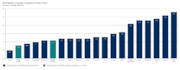
The new Plan reviews road casualty data against a 2010-14 baseline figure and demonstrates how London has made significant progress in reducing road danger over the past 10 years, with streets becoming safer more quickly than the rest of the country - and equivalent international capitals including Paris, New York, Brussels, Warsaw, Dublin, Montreal, Barcelona, Rome and Lisbon [1].
London’s evidence-led Vision Zero approach has already made the capital’s roads safer – especially for children and people walking, cycling, motorcycling or catching the bus. Since 2015, an estimated 262 deaths have been prevented on London’s roads thanks to the Mayor, TfL and Vision Zero partners collectively taking action [2].
In 2024, the number of people killed or seriously injured was 24 per cent lower (1,162 people fewer) than the 2010-2014 baseline [3], marking the lowest number of serious casualties ever recorded outside the pandemic-affected years (2020 and 2021). Provisional data indicates 2025 matched 2023 for the lowest number of road fatalities in London ever outside the pandemic.
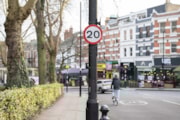
On average, six fewer people each year have been killed in collisions with HGVs while walking, cycling or motorcycling since the introduction of the Mayor’s Direct Vision Standard and targeted enforcement by TfL and MPS [4]. The introduction of 20mph limits on borough roads at current levels of enforcement has led to 34 per cent fewer people, and 50 per cent fewer children, being killed or seriously injured on those roads [5].
The Mayor and TfL have also quadrupled the size of London's cycle network since 2016, so it now spans 430km and nearly a third of Londoners live within 400m of these safe cycling routes. This growth has supported a boom in cycling, with 39 per cent more journeys in 2024 than the 2010-14 baseline, while the risk of cyclists being killed or seriously injured has fallen by 23 per cent in that same time period [6].
However, further action is needed to drive greater progress and tackle new challenges in order to deliver the ambitious Vision Zero goal of eliminating death and serious injury on London’s roads by 2041. The new plan outlines 43 essential actions required to reduce road danger - including rolling out more safer speed limits, redesigning high streets, addressing danger on side roads, and strengthening enforcement against dangerous driving. TfL also sees this as a strong opportunity to align and strengthen joint working with national Government, who are responsible for many of the most significant road safety levers and have a key role to play in supporting the delivery of Vision Zero.
Key innovations and measures that TfL has committed to as part of the plan include:
- Creating safer, more welcoming high streets and neighbourhoods by delivering at least 65km of safer speed limits on the TfL road network and supporting boroughs to deliver more 20mph schemes on their roads
- Assessing how to tackle the safety issues posed by oversized cars such as SUVs, which are increasingly common on London’s roads and more likely to cause deaths or serious injuries in collisions
- Modernising and expanding London’s safety‑camera network, adding at least 20 new sites and investing in new technology that is adaptable to future enforcement needs
- Delivering 1,000 new zebra or signalised pedestrian crossings by 2031 to make everyday journeys easier and safer - including on school routes, high streets, busy roads and near bus stops - as well as trialling side road zebra crossings on the TfL road network
- Expanding and accelerating delivery of high‑quality cycle routes, so the proportion of Londoners living within 400 metres of the strategic cycle network increases from 29 per cent in 2025 to 55 per cent by 2035
- Trialling the latest safety technology - including partnering with the Met Police to trial cameras that can use AI to detect drivers using mobile phones or not wearing seatbelts, trialling technology to detect illegal number plates, and enhanced roadside drug-testing technology
- Enabling more children and young people to walk and cycle to school safely by delivering 200 more School Streets by 2030, expanding the programme to secondary schools, and bringing the total number of School Streets in London to 1,000
- Improving bus safety by achieving 100 per cent Intelligent Speed Assist (ISA) coverage across the bus fleet by 2031, by introducing new vehicles and retrofitting older vehicles.
- Working with partners in MPS and London boroughs to strengthen enforcement, piloting innovative approaches to ensure safe speeds and funding a new pan‑London Road Danger Reduction team to tackle the most dangerous offences: speeding, mobile phone use, driving under influence of drugs or alcohol, and driving uninsured or unlicensed
The Mayor of London, Sadiq Khan, said: “I’m proud that we have saved lives through the important steps already taken to deliver my Vision Zero goal, making our roads safer more quickly than the rest of the country and equivalent international capitals including New York and Paris. But every death or serious injury on our roads is unacceptable and we must go further and faster to eliminate this heartbreak across the capital. I’m pleased to have the support of vital partners on this new plan to further reduce road danger as we continue building a safer, fairer, better London for everyone.”
Lilli Matson, TfL's Chief Safety Health and Environment Officer, said: "London has made real progress in reducing road danger, with lives saved across the city through the action we have taken. But we cannot accept that it is inevitable that anyone should lose their life while travelling in the capital. This new five‑year plan sets out the clear, evidence‑led actions we know will save lives, from safer speed limits and safer junctions to modern enforcement technology. Working side by side with the Met and London’s boroughs, we are absolutely determined to deliver this plan, helping us build a safer, healthier city for everyone.”
Commander Charmain Brenyah, Head of Met Police Uniformed Operations, said: “It is tragic whenever anyone is killed or seriously injured on our roads, and our officers remain totally committed to reducing that risk. We are using data and precise intelligence to identify high-risk areas and deploy officers where they can target the offenders causing the most harm on our roads. We continue to work closely with TfL, other emergency services, and the community in delivering Vision Zero’s ambition of making London’s roads safer for everyone.”
Jason Killens KAM, Chief Executive of London Ambulance Service, said: “Every road collision we attend represents a moment where lives can change forever. Our crews give their all to saving lives and caring for the injured, but there is no doubt about the human cost involved in road traffic collisions – families facing unimaginable loss. It’s often the vulnerable who are most at risk on the roads – the young and old who are seriously hurt or killed.
“These incidents are particularly tragic because so many are preventable. And behind every incident is a person, a family and a community affected.”
London Fire Commissioner, Jonathan Smith, said: “Firefighters rescue someone from a road traffic collision every week, supported by the Brigade’s specialised Fire Rescue Units, who are trained to deliver life-saving interventions to those who are trapped or injured.
“Vision Zero is a welcome initiative that has already saved countless lives across the capital. We are pleased to support these plans to reduce road traffic collisions and we will continue to work closely with our partners to achieve these aims.”
Contact Information
TfL Press Office
Transport for London
0343 222 4141
pressoffice@tfl.gov.uk
Notes to editors
Vision Zero Action Plan 2 can be found here: The Mayor's Transport Strategy - Transport for London
- See data table on page 21 of VZAP2. (see attachment Graph 1)
- More than 250 deaths have been prevented since 2015, compared to the number of deaths expected had annual fatalities continued at the 2010-2014 baseline level. Further info can be found on page 19 of the Vision Zero Action Plan 2.
Performance Year
People killed
Annual vs baseline
Cumulative reduction in fatalities vs the 2010-14 baseline
2010-14 average
136
0
0
2015
136
0
0
2016
116
20
20
2017
131
5
25
2018
112
24
49
2019
125
11
60
2020
96
40
100
2021
75
61
161
2022
102
34
195
2023
95
41
236
2024
110
26
262 (=over 250)
2025* (provisional)
95
- London's latest road casualty data can be found here: Road safety data - Transport for London
- The Mayor’s Direct Vision Standard (DVS) is a world-leading system that sets safety requirements for how much an HGV driver must be able to see directly through their cab windows. Every HGV is given a star rating from 0 (very limited direct vision) to 5 (good direct vision), based solely on its cab design, which reflects the level of risk the vehicle poses to people walking, cycling and motorcycling. DVS data can be found on page 14: https://content.tfl.gov.uk/casualties-in-greater-london-2024.pdf
- https://tfl.gov.uk/info-for/media/press-releases/2025/may/powerful-new-long-term-tfl-research-shows-20mph-speed-limits-save-lives-on-london-s-roads
- Cycling risk rates from 2024 road casualty data cited in [3] and cycling journey stats from 2024 Travel in London report: https://content.tfl.gov.uk/travel-in-london-2024-active-travel-trends-acc.pdf


Powered by Onclusive PR Manager © 2026