
Wednesday 27 May 2026
Mayor and TfL set out major new plan to boost walking and improve public health in London through significant street improvements
PN-187
- The new Walking and Wheeling Action Plan will help more Londoners walk safely to school, shops and public transport links – improving people’s health and supporting high streets
- Key targets are to increase the number of adults achieving 20 minutes of daily walking across London, boost walking in central London, and help more children walk to school
- The plan supports the Mayor’s ambition for 80 per cent of trips to be made through walking, cycling or public transport by 2041
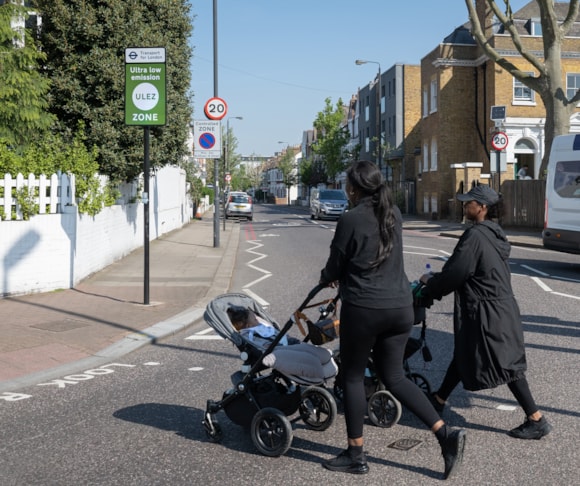
The Mayor and Transport for London (TfL) have today (Wednesday 27 May 2026) launched their Walking and Wheeling Action Plan. The plan sets out how the Mayor, TfL and London’s boroughs will work closely to invest in significant improvements to London's streets over the next decade, making it easier, safer, and more attractive than ever to walk and wheel in the capital. Boroughs are responsible for the vast majority of London’s streets, meaning the plan will be delivered through close collaboration to ensure improvements are felt in local neighbourhoods across the capital.
Key measures in the plan that TfL will deliver with boroughs and partners include:
- delivering 1,000 new pedestrian crossings by 2031, making it easier and safer to cross busy roads through the TfL Business Plan and borough Local Implementation Plans (LIPs)
- expanding School Streets so that around 1,000 schools in the capital benefit from them, and helping more children walk safely to school through borough LIPs
- working with boroughs and stakeholders to develop a movement strategy so that public space in central London supports the city’s role as a global and economic centre with world-class public realm, safer streets and more space for people walking, cycling or connecting with public transport
- developing a new river walking route by 2029, linking existing paths, parks and neighbourhoods, working with boroughs and landowners
- transforming town centres and high streets in partnership with boroughs through the Transport for London Road Network (TLRN) Lowering Speeds programme, which makes 20mph the default across central and inner London, creating safer streets and high‑quality walking and wheeling environments that give more space to people and help local businesses thrive
- supporting boroughs to deliver 50 area-wide neighbourhood schemes by 2031 that make walking the easiest choice for local journeys by making neighbourhoods safe, with good quality pavements, and not dominated by motor traffic through borough LIPs
- tackling pavement clutter, including poorly parked dockless bikes, to keep footways clear and accessible through operation Clearway on the TLRN and sharing best practice with boroughs
- improving walking routes to bus stops and stations so that journeys feel safe and well connected, through design guidance as well as Better Bus Partnerships and LIP funding
- strengthening action on women’s safety and fear of crime – including more CCTV trials at bus stops, women's safety audits, and night-time transport assessments for new developments, as well as working closely with the police to address crime across the capital
- connecting neighbourhoods to parks, waterways and the Walk London leisure walking network by working with boroughs and landowners to deliver a new strategic walking route that connects a number of waterways, by 2029
Walking and wheeling are fundamental to the way people get around the capital, including how they access public transport. Increasing walking and wheeling - especially among children and less active people - will bring major health benefits for Londoners as well as helping businesses, high streets and the economy to thrive.

Walking is already the most common way people travel in London, accounting for 38 per cent of all trips – but many Londoners are still put off by road danger, poor crossings, fear of crime and inaccessible pavements. The new Walking and Wheeling Action Plan aims to tackle those barriers, enabling more people to choose walking for shorter journeys, from helping more children walk safely to school to making local trips easier for everyone. Recognising that disabled people, older Londoners and certain communities face greater barriers, the plan also addresses inequalities in access to walking.
This new London-wide plan will support boroughs across the capital to identify and prioritise areas for improvement, ensuring schemes reflect local needs and deliver the greatest benefits for communities. By creating streets that work for everyone, TfL and the Mayor aim to make walking a realistic option for more Londoners.
The plan supports the Mayor’s ambition for 80 per cent of trips to be made by walking, cycling or public transport by 2041 – setting out clear actions to boost health, improve safety and support local economies. Walking is one of the easiest ways to build physical activity into everyday life, particularly for people who are currently inactive.
Several major projects are also underway and planned to enhance the walking experience in central London, including the transformation of Lambeth Bridge. Work to improve the junctions to the north and south of the bridge are almost complete, and work on the bridge itself is due to be finished within the next couple of weeks.
Since the Mayor’s first Walking Action Plan was published in 2018, TfL has worked closely with boroughs and partners to deliver a wide range of improvements to make London more walkable. This includes adding a new 15-mile Green Link Walk to the Walk London network, supporting more than 100,000 Londoners from diverse communities to access walking and cycling through grant programmes and delivering new and improved pedestrian crossings across the TfL Road Network. Updates to traffic signals have reduced waiting times and given greater priority to people walking, particularly in town centres and around schools, while street works are now managed more effectively to minimise disruption for pedestrians.
TfL and boroughs have also expanded School Streets to more than 800 locations across the capital, helping create safer environments for children, with nearly half of London’s schools now taking part in the Travel for Life programme and more than 1,000 achieving Gold accreditation. Progress on walking to school has also exceeded expectations, with the proportion of primary school journeys made on foot reaching 63 per cent. This achievement has passed both the original target of 57 per cent, and the updated 60 per cent target set in 2022 to be achieved in 2026. The new plan builds on these improvements by increasing ambition and tackling the remaining barriers to walking.
Walking and wheeling bring wide-ranging benefits, from improving physical and mental health to cutting air pollution, reducing congestion and helping high streets thrive. Creating streets that are safer and more welcoming also supports children, older people and disabled Londoners to travel independently.
Christina Calderato, Director of Transport Strategy at TfL, said: "Walking is already at the heart of how Londoners get around, but we know too many people are still put off by safety concerns, poor crossings or inaccessible streets. This new plan sets out how we’ll change that by making it easier and more pleasant to walk for everyday journeys, whether that’s getting to school, the station or the local high street. By working in partnership with boroughs and communities, we can create streets that are safer, more inclusive and better for everyone."
Will Norman, London’s walking and cycling commissioner, said: "The Mayor and I are determined to make walking the safest, easiest and most enjoyable way of getting around London. This new plan will help us drive further progress in cleaning up our air and tackling congestion, with record amounts invested to support more Londoners in leaving the car at home and walking instead. Whether you’re popping to the shops or heading for the local train station, walking for shorter journeys is vital for the health and future prosperity of our city, as we continue building a greener and better London for everyone."
Contact Information
TfL Press Office
Transport for London
0343 222 4141
pressoffice@tfl.gov.uk
Notes to editors
- Wheeling is defined as a mode of movement at a walking pace that involves wheels, such as using a wheelchair or mobility scooter, or walking with wheels, such as a pushchair or walking frame. Where only the term walking is used, wheeling is also included
- The plan has been developed in consultation with London boroughs and a wide range of stakeholders, including disability groups, health partners, youth organisations and business representatives

Powered by Onclusive PR Manager © 2026