
Monday 15 Jun 2026
Londoners to benefit from cleaner air as green transformation accelerates with 3,000th zero-emission bus
PN-204
- More than 3,000 zero emission buses now on London’s streets, marking a 100-fold increase over the last decade and meaning a third of the fleet is green ahead of Clean Air Day
- Making all buses emission-free at the tailpipe could save five million tonnes of carbon over the next 20 years
- All of TfL’s bus shelter lighting now upgraded to LED lighting – cutting energy use in half and making bus shelters brighter, safer places to be
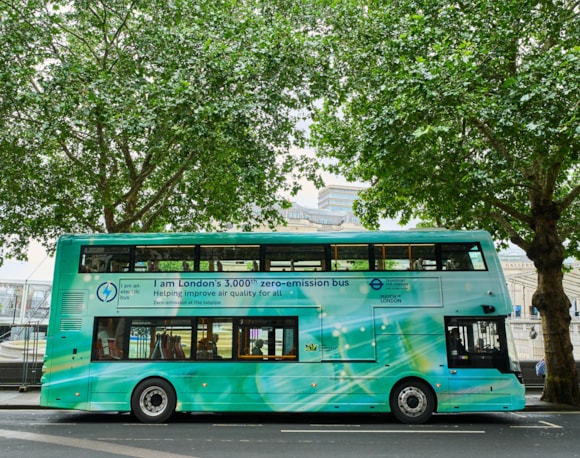
The capital’s iconic red buses have hit a major green milestone ahead of Clean Air Day (18 June) with 3,000 zero-emission buses now in operation – around a third of the Transport for London (TfL) fleet.
Already recognised as having the largest zero-emission bus fleet in Western Europe, London has seen a rapid 100-fold increase over the past decade, from just 30 electric buses in 2016. TfL is accelerating the delivery of its zero-emission fleet, which is set to double in under five years.
As transport accounts for a significant proportion of London’s greenhouse gas emissions, it’s vital that TfL continues to lead the green transition to tackle the climate emergency, cut toxic pollution, and protect public health and the environment. Making the bus fleet zero-emission at the tailpipe could save an estimated five million tonnes of carbon over the next two decades, while operating around 3,000 electric buses over the course of a year alone is estimated to save more than 100,000 tonnes of CO₂ emissions*. This equates to more than 118,900 flights between London and New York City**.

London’s buses are among the greenest in the world, with lower CO₂ emissions per passenger kilometre than cities such as New York and Vancouver***. Since 2021, all new buses have been zero-emission at the tailpipe, and the rest meet or exceed Euro VI standards. Buses also play a crucial role in reducing congestion, carrying up to 80 times as many passengers as a car while using only around three times as much road space.
The Mayor and TfL are making the bus network greener in more ways than one, having also converted all the lighting at its bus shelters to Light Emitting Diode (LED) lighting. Around 12,000 bus shelters across the capital now have more energy-efficient, luminous and longer-lasting lights, making the shelters both greener and more welcoming for customers. The new lighting will use less than half as much energy and brighten up bus shelters by 10 per cent.
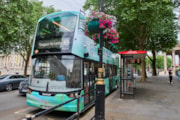
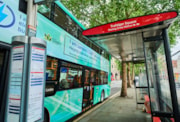
Londoners will be able to spot the 3,000th zero-emission bus, which has been specially wrapped to commemorate the milestone, on route 165 travelling between Romford and Rainham. The 3000th zero-emission bus will operate from Stagecoach’s Rainham bus depot. It is part of a wider order of more than 120 zero-emission buses from Ballymena-based Wrightbus, supporting the UK’s zero-emission bus industry, green jobs and wider economic growth.

With Rainham depot routes 174/674, 165 and 287 already zero-emission, this order will enable a further six routes at the depot to become zero-emission within the next year – including the new SL12, which will serve customers between Rainham and Gants Hill. The depot is currently being upgraded to support the switch to zero-emission buses, with work including installation of new high-level chargers mounted on overhead steel gantries to power the buses. The steel for these has been ordered from a local company, Rainham Steel, based only a few miles away from the bus depot itself.
The Mayor of London, Sadiq Khan, said: "I'm proud that London is leading the charge in sustainable transport with 3,000 of our iconic red buses now going green – which is a hundred times more than when I took office in 2016, and one of the largest zero-emission bus fleets in Europe.
"Over the last decade as Mayor, I’ve worked with TfL to take our bus network from strength to strength – creating new services, such as the game-changing Superloop, and boosting our zero- and low-emission buses to help clean up our air and support our climate goals.
"I remain committed to doing everything in my power to ensure that buses remain the most accessible, affordable and sustainable form of transport in the capital as we continue building a greener, fairer, better London for everyone."
Lorna Murphy, Director of Buses at TfL, said: "This is more than a milestone; it is real visible change – cleaner journeys for Londoners every day. With a third of London’s fleet of iconic buses are now zero-emission, it is even easier for customers to travel around the city in a sustainable, affordable and accessible way. We have the largest zero-emission bus fleet in Western Europe and now more than 3,000 of London’s buses are now zero-emission, up from just 30 in 2016, demonstrating the pace of progress as we strive to transition the whole of the fleet.
"We’re brightening up our customers’ journeys in more ways than one, as we’ve also converted all of the lighting at our bus shelters to LED lighting. Using less energy, these bulbs will make our bus shelters more welcoming for customers and help them to feel safer, especially at night. From new zero-emission buses to LED bulbs, every step we take to decarbonise the public transport network propels us on our journey towards net zero."
Sam Greer, Chief Operating Officer at Stagecoach Group, said: "We’re incredibly proud to be playing our part in London’s transition to a zero-emission bus network and it’s fantastic to see the 3,000th zero-emission bus entering service from our Rainham Garage. This milestone reflects the strength of collaboration between TfL, operators and industry partners along with our shared commitment to delivering cleaner, greener journeys for the communities we serve."
Christian Reynolds, Managing Director of Wrightbus, said: "We are delighted to have provided London’s 3,000th zero-emission bus in what is also a landmark year for us, as we celebrate our 80th anniversary.
"Each vehicle represents not only a step forward in decarbonising transport, providing cleaner air for the people of London, but also a commitment to accessibility, innovation and passenger experience."
Charles Long, Senior Political Advisor at Green Alliance, said: "Red buses are going green around the capital. Buses cut congestion and damaging air pollution – electric buses supercharge this. London is showing the way by only buying new buses if they are zero-emission at the tailpipe."
Zero-emission buses also give customers quieter, smoother journeys due to fewer vibrations, and include USB charging points and TfL's Bus Safety Standard features. As part of TfL's commitment to achieving the Mayor's Vision Zero goal of eliminating all deaths and serious injuries on London's roads, all buses have a safer front-end design, and include the latest safety features, such as speed limiting technology, audible warnings to alert pedestrians and other road users to the bus, and improved direct and indirect vision for drivers through camera monitoring instead of mirrors. Earlier this month, TfL launched its Bus Safety Standard 2 Roadmap, which reflects TfL’s shared commitment alongside the bus industry to make buses even safer for all.
Contact Information
TfL Press Office
Transport for London
0343 222 4141
pressoffice@tfl.gov.uk
Notes to editors
- * Compared to an equivalent fossil fuel-based fleet
- ** Based on Air travel conversion factors taken from Department of Energy Security and Net Zero (DESNZ) https://www.gov.uk/government/publications/greenhouse-gas-reporting-conversion-factors-2025
- *** Source: The Performance of London Buses
- There are 135 bus routes in London that are fully zero-emission and 68 that are partially converted to zero-emission
- TfL is currently trialling hydrogen buses on the network as well as tram-like buses powered by pantograph, which allows fast, high-power charging at each end of the 15-mile journey, through an arm-like structure attached to the bus roof, which means drivers do not return to garages to recharge
- TfL has committed to ensuring all new vehicles entering service are zero-emission and is working with bus manufacturers to develop a vibrant and competitive zero-emission market, alongside work with stakeholders to ensure necessary infrastructure is available to enable the transition
- The Mayor of London, Sadiq Khan, recently announced the extension of his popular Hopper fare at weekends. The new offer means anyone travelling on buses and trams at the weekend on a Saturday or a Sunday between 25 July and 31 August will only pay one single fare for unlimited journeys across London on that day, making it easier for Londoners and visitors to make the most of everything the capital has to offer during the summer holidays
- In 2023, TfL launched the Superloop, a game-changing network of express bus services, linking stations, hospitals and transport hubs across outer London. There are now 12 Superloop bus routes (including the BL1 express service from Waterloo to Lewisham, mirroring the proposed Bakerloo Tube line extension route) covering 218 kilometres of routes. Plans are now in place to expand the network even further with the SL12 launching later this year and SL14 and SL15 launching in 2027, ensuring buses continue to play a critical role in a green, healthy, and inclusive future for London
- TfL's Bus Action Plan aims to increase the number of customers choosing to travel by bus across London by making bus travel more reliable, faster and greener: content.tfl.gov.uk/bus-action-plan.pdf.
- TfL published its Bus Safety Strategy that outlines specific actions for TfL, bus operators and the bus industry to deliver a safe bus network. The strategy aims to achieve its Vision Zero goals for the bus network and aims to reduce the number of deaths caused by bus collisions and for zero serious injuries by 2041. The strategy also sets out TfL's safety priorities for the bus network and ensure that buses remain the safest way to travel on the roads and a target for buses that no one is killed in, or by, a London bus by 2030. The strategy can be found on TfL’s website: https://tfl.gov.uk/corporate/publications-and-reports/bus-safety-data
- Earlier this month, TfL launched its Bus Safety Standard 2 Roadmap, which complements the bus safety strategy and reflects TfL’s shared commitment alongside the bus industry to make buses even safer for all. It can be found here: Bus Safety Standard 2
- Complementing the target to transition to a fully zero-emission fleet, there are a range of initiatives – such as the trial of new bus shelter designs at 27 locations across London – that will help to improve customers’ bus journeys
- Buses are already the most inclusive form of public transport in London, with 96 per cent of households within 400 metres of a bus stop and more than 90 per cent served by high-frequency routes. Source: content.tfl.gov.uk/bus-action-plan.pdf
- In addition to bus shelters, TfL is working across its entire network to upgrade lighting to LEDs to help further reduce costs while improving customer benefits and minimising its long-term impact on the environment. More than half of all Tube stations across London have been converted to only use LED lighting, with more planned for conversion in the coming months and years. During 2025/26, more than 20,000 LEDs were installed across stations. Customer lighting at tram stops served by London Trams have been converted to LED lighting, and work is also taking place to upgrade lighting at bus stations across London, as well as at a number of Tube depots. Around 87 per cent of all lamp columns on the TfL Road Network are also now LED lights, with work underway to convert more of these lamps as soon as possible. Between April 2024 – April 2026, more than 12,000 LED lights were installed more widely across the road network, including sign lights and at underpasses and subways

Powered by Onclusive PR Manager © 2026